
October 7, 2026 by Oceania Cruises
Read More
Read More

While Oceania Cruises has a history dating back almost a quarter century and the world of cruising can trace its beginnings back to the late 1800s, the Vikings have the jump on almost everyone. Their seafaring explorations – and conquests – began well over 1,200 years ago. Long before Oceania Cruises carried travelers along Norway’s fjords or across the North Sea, sleek Viking longships cut through these waters, their fearless chieftains shouting orders in Old Norse above the howling wind and crashing waves.
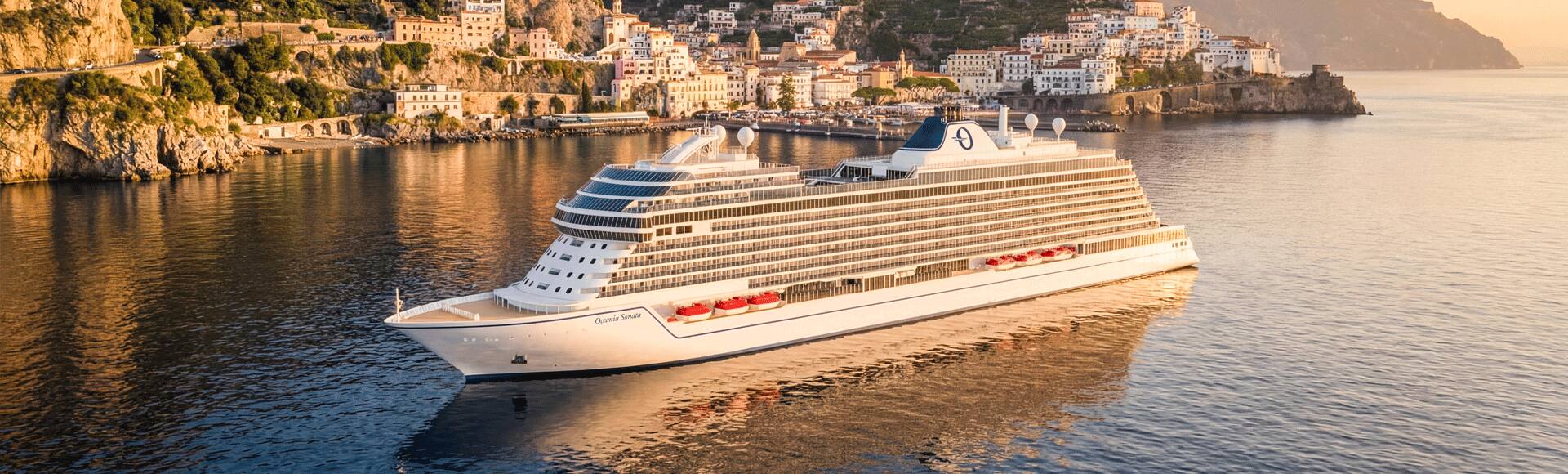
Things have changed a bit over the last twelve centuries. Open-air wooden vessels powered by sails and oarsmen have given way to the elegant ships of Oceania Cruises. Grog and grub have been replaced with fine wines and even finer cuisine. While we may take you to many of the same Northern European ports once shaped by daring Norsemen, we do so with comforts unheard of during the Age of the Vikings. From burial boats and ring fortresses to reconstructed longhouses and hearty Viking fare, these sites reveal a far more multifaceted world than the Hägar the Horrible comics might suggest.
Norway: The Saga Begins Here
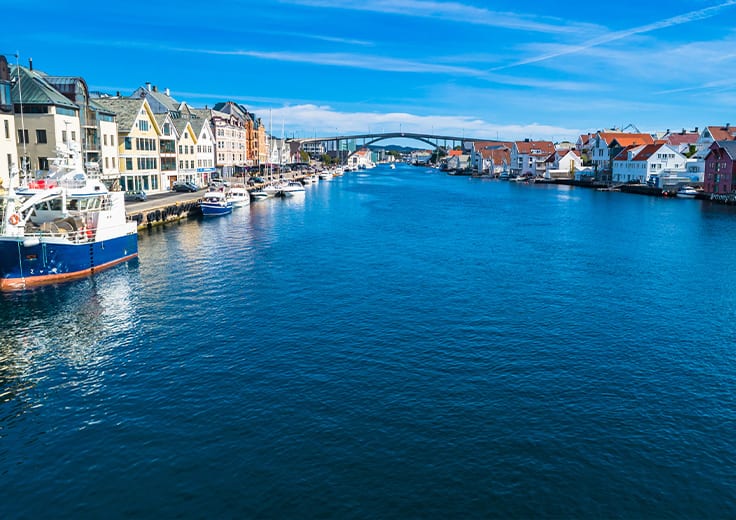
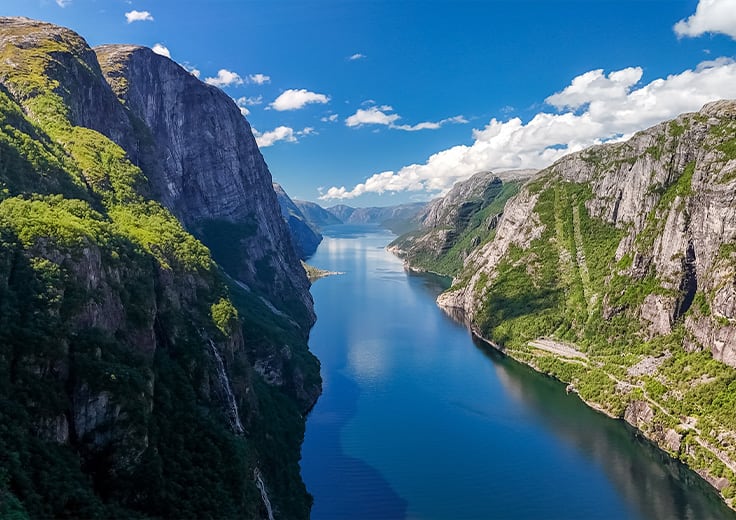
Let’s face it: few places feel more closely tied to Viking identity than Norway. In Oslo, the 9th-century burial ships displayed at the Viking Ship Museum still retain their graceful curves, carefully fitted planks and meticulously carved details. These boats survive today because they were placed inside great burial mounds, honoring powerful leaders as they began their final journey into the afterlife. While we love the idea of the traditional Viking funeral of Hollywood lore – a blazing longship pushed out to sea – we’re glad the more subtle method has allowed some of these great ships to survive.
At Avaldsnes near Haugesund, a Viking royal seat for the evocatively named King Harald Fairhair, reconstructed farm buildings allow you to wander among timber halls and experience life in a coastal stronghold. In the Lofoten Islands, the Lofotr Viking Museum boasts a massive chieftain’s hall rebuilt at full scale. Sparks fly from the blacksmith’s forge, boats take shape in the yard and you can even handle replica adzes, hand axes and augers much like those once held by calloused Viking hands.
Norway’s stave churches offer one of the most memorable architectural legacies of the Viking era’s transition to Christianity. Built entirely of interlocking timber and crowned with steep, tiered roofs, these structures rise with a fairytale presence. Carved dragon heads emerge from the gables, and intricate portals blend Christian symbolism with unmistakable Viking design, creating sanctuaries that combine sacred and savage with equal reverence.
Denmark: Before Bluetooth Was Wireless Technology
From Copenhagen, an excursion to Roskilde reveals one of the Viking period’s most remarkable discoveries: five ships recovered from the fjord after nearly a thousand years beneath the surface. Deliberately sunk in the 11th century to block a narrow channel and defend the harbor, the vessels formed a kind of Viking-Age traffic jam designed to slow any unwelcome visitors.
At Trelleborg, a UNESCO-listed ring fortress built by King Harald Bluetooth in the 10th century, the precision of Viking engineering may be surprising. Its near-perfect circular ramparts enclose longhouses once arranged with mathematical order along intersecting streets. Reconstructed structures bring the layout to life, underscoring that this was no improvised encampment but a deliberately planned stronghold. Here, the Vikings appear less as mythic marauders and more like engineers who took their geometry extremely seriously. It turns out that King Harald’s legacy extends well beyond his namesake Bluetooth icon on your phone.
Sweden: Viking History with a Side of Mead
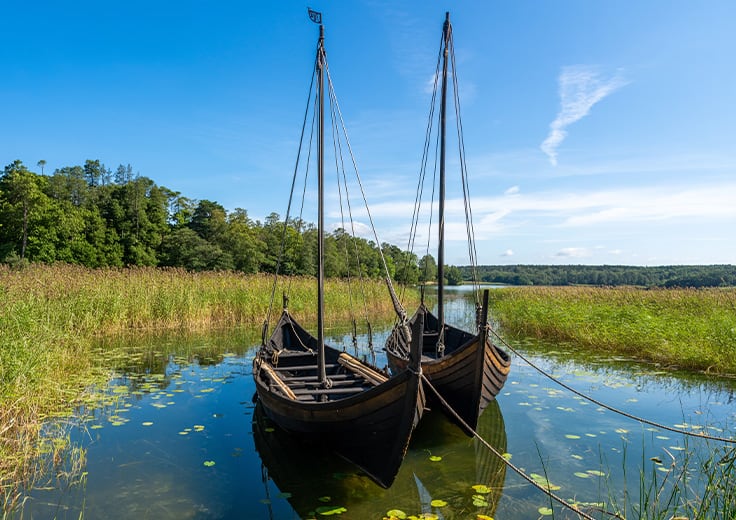
On Lake Malaren near Stockholm, the UNESCO World Heritage site of Birka preserves the remains of one of the Viking Age’s earliest trading settlements, where merchants once exchanged furs, silver and glass beads. Nearby, taste a bit of history at Restaurant Särimner, a Viking-inspired pub where locally sourced Swedish ingredients are served with a nod to the past. Plates might include night-baked lamb or grilled trout alongside roasted root vegetables, with several varieties of mead on hand should you wish to toast the day in proper Viking fashion.
England: The North Still Remembers
Many historians credit the June 8, 792 CE Viking raid on the monastery at Lindisfarne in Northumbria, England as the beginning of the Viking era. So, it’s no surprise that even in parts of northern and eastern England where no longhouses remain, the Viking imprint survives in everyday language. Towns ending in “-by” – such as Grimsby and Whitby – derive from the Old Norse word for “farm” or “settlement,” while “-thorpe” and “-thwaite” signal small villages first named under Norse rule. These linguistic clues reflect the era of the Danelaw, when large portions of England were governed by Scandinavian settlers. The longships may be gone, but the map still speaks Old Norse.
Iceland: Trolls Before the Internet
From Reykjavik, travel to Thingvellir, a broad valley formed by the slow drift of the American and Eurasian tectonic plates. Here, Norse leaders gathered each summer to debate laws and settle disputes in the open air. Speakers addressed the assembly from the Lögberg, or “Law Rock,” a natural platform where the surrounding cliffs and open sky formed a surprisingly effective parliament chamber.
Grundarfjörður offers access to Saefellsjokull National Park, home to a glacier-capped volcano that rises dramatically above lava fields. The region is tied to the saga of Bard, a half-man, half-troll settler of the Viking era. After his daughter was pushed onto an ice floe and lost at sea, Bard killed the man responsible and, overcome with grief, withdrew into a glacier rather than deal with people ever again, a reaction that may feel understandable to many people today after scrolling through social media.
Scotland and Ireland: Step into a Viking’s Shoes – Literally
On the southern tip of Scotland’s Shetland Islands, the Jarlshof archaeological site is renowned for circular Iron Age towers and homes sitting beside the distinctly rectangular outlines of Norse longhouses, their thick walls built to withstand relentless wind and sea. Walking through the ruins feels like stepping through several millennia at once, as Viking settlers built their homes among the remains of communities that had been there long before them.
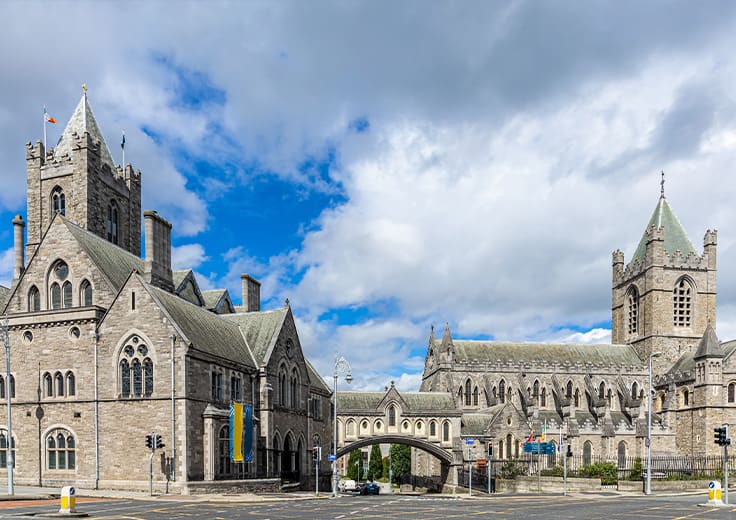
In Dublin, Viking history gets a lively retelling at Dublinia, an interactive museum located in the heart of the city’s medieval quarter. Recreated streets and timber houses bring Norse Dublin roaring back to life, when the settlement thrived as a bustling port linking Ireland to Scandinavia. Step inside a Viking dwelling, wield replica weapons and even try on Viking clothing – while confirming once and for all that the horned helmet is more costume than history.
Normandy: Vikings Discover Real Estate
Any fan of the TV show “House Hunters” knows the appeal of owning a piece of real estate. In northern France, the Vikings figured it out quite some time ago. Norse leader Rollo negotiated land along the Seine in exchange for defending it, effectively converting a raiding enterprise into a governing one. From that treaty came the name Normandy – the “land of the Northmen” – proof that even without certified Realtors, the Vikings eventually discovered the appeal of long-term property ownership.
The Viking era may belong to the past, yet its presence lingers across Northern Europe in ways both grand and quietly unexpected. Much of that history endures thanks to the passion of the people who proudly maintain and share their Viking heritage today, many of whom you’ll encounter on an Oceania Cruises voyage through Northern Europe. As you sail these waters once crossed by Norse seafarers, you’ll enjoy exceptional cuisine, gracious service and stylish accommodations. And as an added bonus, there’s no need to row!
Ready to discover legendary Viking and Norse heritage on your next Northern Europe cruise? Tell us which destination you’d visit first on Facebook.